English Wine
From Pale Pink to Deep Red: Three Sides of English Pinot Noir
August 6, 2026
Type to begin your search
International Pinot Noir Day falls on 18 August. It’s a date we’re rather fond of here in Devon, because Pinot Noir is the grape behind three of our still wines and a good deal of our reputation.
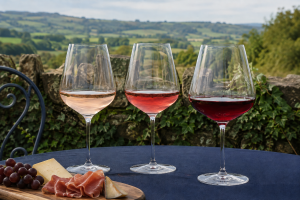
Line those three bottles up and you’d never guess they were related. One is the palest salmon pink. One glows redcurrant and cranberry. One is bright cherry red. The same grape in all three, or a good part of it, and three completely different wines.
That’s what this article is about: how one grape ends up in three such different colours, what each of them tastes like, and when you’d want to open them.
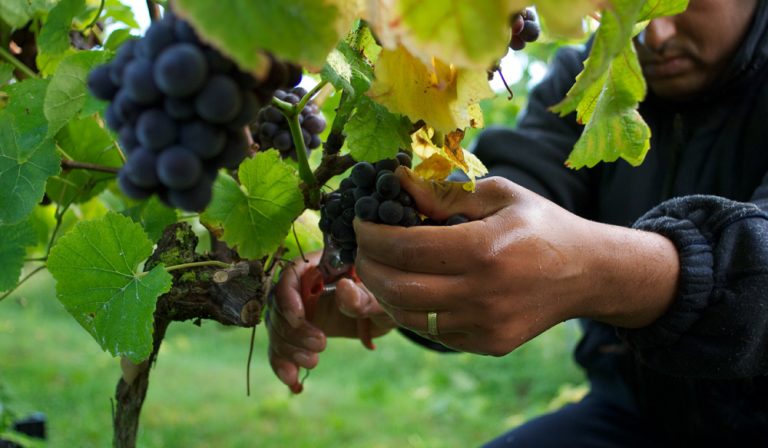
Start with the bit that surprises everyone. The juice inside a Pinot Noir grape is very nearly colourless. Squeeze one and you’d get something close to clear.
All the colour lives in the skins. So the real question is never what colour Pinot Noir is. It’s how long the juice and the skins were left together.
A gentle press and a few hours gives you the faintest blush. Longer, with riper fruit, and the pink deepens. Leave them together right through fermentation and you’re into red wine.
How ripe the fruit was matters too, and so does everything decided in the winery: when to pick, how gently to press, what to blend it with, whether to use oak. But time with the skins is the headline. One grape, one set of choices, and a wine that can land almost anywhere between pale pink and deep red.
Which is exactly what our three still wines do.
The easy one. The bottle that empties while you’re still deciding what to cook.
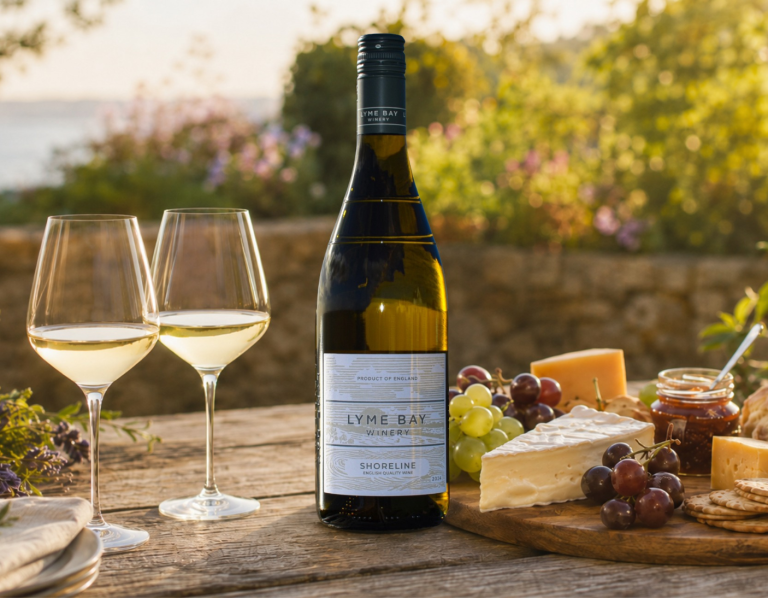
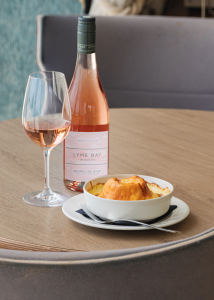
Shoreline Rosé is the perfect partner to Shoreline, our signature blend and bestseller, and it does something nobody else was doing. It blends English Bacchus with Pinot Noir, as far as we know it’s an industry first. And we’re rather pleased with how it turned out. So, as it happens, were the judges at Decanter, the IWSC and WineGB, who each gave it a bronze this year.
The fruit comes from Sandhurst in Kent. The grapes are picked by hand, chilled during transit and then gently crushed together in the press. That gentleness is the whole trick. Just enough contact with the Pinot Noir skins to draw a delicate pink out of the juice, and not a moment more.
The colour is barely there, the palest salmon. Put your nose in and you get red berries and white flowers, more scent than fruit. It’s light on its feet and honestly quite hard to put down. Bacchus brings the fragrance and the lift. Pinot Noir hums away underneath with just enough red fruit to keep it interesting.
Serve it cold. Lovely with pâté, a spring risotto, or a courgette and feta tart, and just as good with nothing at all.
The one that catches people out, and the reason for that is worth a section of its own further down.
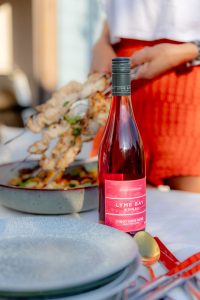
It’s entirely Pinot Noir, from a single vineyard at Tudwick Hall in Essex, and you notice the colour before anything else. Vibrant redcurrant and cranberry, a good few shades deeper than the Shoreline. Stand the two together and the difference is immediate.
That colour is a 2025 story. The season was warm and sunny, the fruit came in beautifully ripe, and a little longer with those perfectly ripe skins gives you a deeper hue and a great deal more to smell and taste.
Wild strawberry, raspberry and red cherry, and then something soft and creamy behind them. Strawberries and cream is doing a lot of work in that description, we know, but it’s the closest we’ve got and it’s what people say back to us.
Chill it, but don’t freeze it. An hour in the fridge is plenty. Serve it too cold and you’ll lose half of what makes it good.
It’s the most common thing we’re asked about this bottle, so it’s worth being clear.
Colour and sweetness have almost nothing to do with each other. Colour comes from time with the skins and how ripe the fruit was. Sweetness comes from how much sugar is left once fermentation has finished. A pale Provence style rosé can be off dry. A deep, glowing pink like this one can be bone dry.
Ours is dry. Both of our rosés are. What the richer colour is actually telling you is that the fruit was riper and the wine has more in it. More going on, not more sugar.
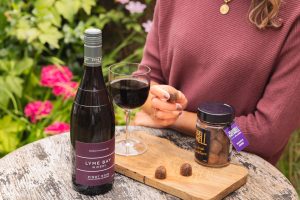
The one to sit down with. Bright cherry red, unmistakably a red wine, and made from the same grape that gave us that pale salmon pink a few paragraphs ago.
The fruit comes from vineyards near the River Crouch in Essex, which are unusual in this country for their ability to ripen Pinot Noir properly. It’s picked late and by hand, from the end of October into November. 2024 was wetter than we’d have liked, but the vines carried very little fruit, and that turned out to be a gift. What there was ripened properly and tasted of a great deal.
This is where the work goes in. The wine is made in small batches, and two or three times a day somebody goes and gently pushes the floating skins back down into the juice by hand. That’s where the colour and the structure come from. After that it spends eight months in barrel, just under a third of it new French oak, then gets blended and left alone to settle for several weeks. We do as little to it as we can before bottling, because the point is to keep the detail rather than tidy it away.
You get cherry and raspberry first, bright and generous. Then it turns on you slightly, and the savoury half arrives: spice, herbs, an earthy mushroom depth that sits there long after you’ve swallowed. That second half is the part that keeps you going back to the glass.
Take it out twenty minutes before dinner and put it in the fridge. Warm Pinot Noir is a waste of a good bottle, and a little chill lets the fruit come forward.
It’s young and it’s drinking beautifully now, though there’s clearly more to come for anyone with the patience to leave a bottle alone. Silver medals from Decanter, the IWSC and WineGB this year suggest we aren’t the only ones who think so.
Ten years ago, a serious English still Pinot Noir was a rare thing. It’s becoming less rare, and there are a few honest reasons why.
Warmer, longer growing seasons help. Pinot Noir needs time on the vine and it’s getting more of it. Growers have got much better at knowing which corners of southern England can genuinely ripen this grape rather than hoping for the best, and at choosing vines that suit the site instead of the other way round. The winemaking has caught up with the fruit, too.
English rosé has come along in the same stride, and for much the same reasons. Riper fruit makes better rosé just as surely as it makes better red.
Our own approach hasn’t changed much. We make the best wines we can from the best fruit, grown by the best growers, in the best locations. We don’t own vineyards up and down the country. We work with a network of growers across the south of England, people who know their own land intimately and plant the right grapes for the climate they’re in. That takes us to Kent for the Shoreline Rosé, and to Essex for both the Pinot Noir Rosé and the red.
None of it is guaranteed. Pinot Noir is famously difficult: thin skinned, fussy about site and season, and completely unforgiving of any lack of attention in the winery. Which is precisely why a good one feels worth marking.

Less about rules, more about when you’d actually reach for each one.
If you’d like to see the three side by side, our Cellar Door in East Devon is open Tuesday to Saturday. There really is no substitute for lining up the glasses and looking at them in daylight.
Join the Lyme Bay mailing list for first access to subscriber only offers, new releases and stories from the winery.
Already a subscriber? Check your inbox. There’s something waiting for you on these wines until 23 August.
Please drink responsibly.