English Wine
What Makes a Wine English? A Story from the Vineyards Behind Our Bottles
October 2, 2026
Type to begin your search
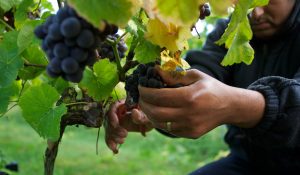
Every autumn, the pace at the winery changes. From September into November, grapes arrive at Shute in East Devon from vineyards all over England. And they’re pressed as soon as they come in. Some, like our Sauvignon Blanc, are chilled the moment they arrive to keep as much of their quality as possible.
Buy British Day turns up right in the thick of it. Not the quietest week for us, admittedly, but a nice excuse to stop and talk about what makes a wine English, and how much happens long before a bottle reaches your table.

The short answer is the grapes. An English wine has to be made from grapes grown in English vineyards, so a wine made abroad and bottled here doesn’t qualify.
You might also come across “British wine”, and the two are easy to mix up. “British wine” has long meant wine made in the UK from imported grape juice or concentrate, rather than from grapes grown here. English and Welsh wine are made from grapes grown in English and Welsh vineyards.
All of which means an English wine can only ever be as good as a year in an English vineyard.
Between pruning in winter and picking in autumn, a vineyard asks for a year of work most of us never see. It starts with what goes in the ground: our growers plant the right grapes for the climate they’re in, so the fruit has the best chance of ripening properly.
After that, the weather has its say, and you can read it in our vintages. In 2017 a late spring frost was followed by a hot, dry summer, which meant less fruit but fruit of high quality, and that fruit went into our Blanc de Blancs 2017. 2019 brought a warm spring and a challenging summer, and the Chardonnay picked that October was rare and concentrated. 2024 was wetter than average, but the Pinot Noir vines carried low yields, and that small crop reached great ripeness and concentration. 2025 was an outstanding harvest, with Pinot Noir that came in perfectly ripe.
Then comes the call on when to pick. Most of the wines in this story were picked by hand, and every year the aim is to bring the fruit in at optimum ripeness.
We make our wines here in Devon from grapes grown by a group of growers with vineyards all over England. Each of them plants what suits their own site, and that lets us choose the vineyard to fit the wine, rather than the other way round.
A handful of sites in Essex can ripen Pinot Noir properly, so their fruit goes into our red. A highly regarded Bacchus vineyard gets a bottle to itself. And because many parcels are fermented separately at Shute, the team can assess each one before deciding what it becomes.
A few of our wines show what that looks like in practice, starting with Shoreline.
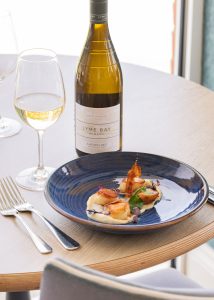
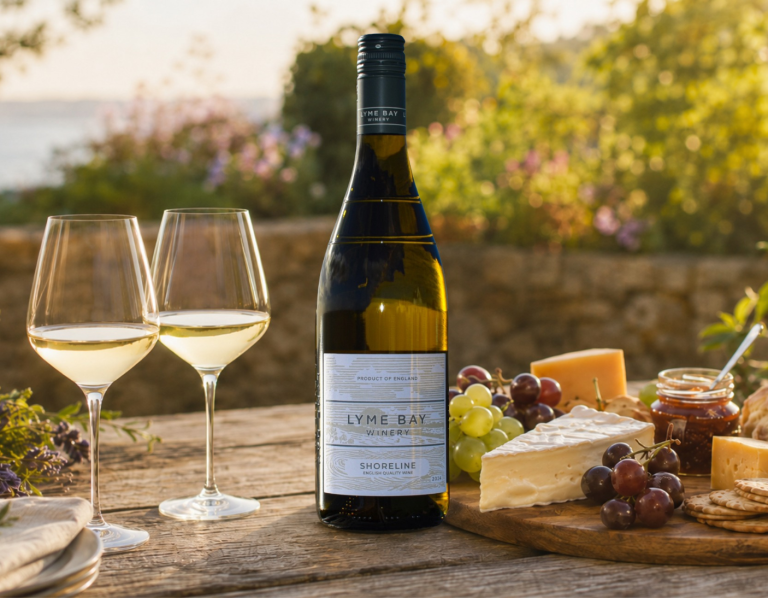
Shoreline is our flagship, and the clearest example of how we work. We describe it as a fresh, complex, quintessentially English dry white.
All of its fruit comes from Essex’s Crouch Valley, a region that delivers fruit of exceptional ripeness. Into the 2024 blend go eight varieties: Reichensteiner, Bacchus, Chardonnay, Seyval Blanc, Ortega, Pinot Noir, Solaris and Sauvignon Blanc. Pinot Noir might seem an odd grape to find in a white wine, but its juice is very nearly colourless and the colour lives in the skins, which we’ve written about in our guide to the colours of English Pinot Noir.
Each parcel is fermented separately, with different yeast strains and temperatures, to build up several layers of flavour and aroma. Once they’ve finished, the team assesses every vat for its potential and character, then blends them in the proportions that suit the wine best. The blend rests for several months on its fine lees to preserve freshness.
That’s a lot of separate decisions for one bottle, and you can taste them. Shoreline has a complex, floral nose with vibrant hints of pineapple and lime. On the palate it’s crisp, balanced and layered, with bright lemon and lime, subtle pineapple and a long, zesty, refreshing finish. The judges at the 2025 WineGB Awards gave the 2024 vintage silver and 90 points, calling it “a refreshing, food-friendly white blend with character”, and we’re not going to argue.
It’s an excellent match for seafood dishes, which, given the name, feels only right.
Also in the Crouch Valley is Great Whitmans, the vineyard Jane Fleming planted in 2006. As she once told us, they chose the spot “by luck rather than design”. The soils are rich Weald clay, which suits Bacchus, and the forests bordering the site shelter the vines from bad weather, helping the grapes stay on the vine longer to ripen.
Great Whitmans fruit goes into our Bacchus 2024, a blend of 90% Bacchus and 10% Sauvignon Blanc, alongside grapes from Tudwick Hall and Crouch Valley Vineyard. It was hand-harvested at optimum ripeness between September and October, and each parcel was fermented in its own lot at between 12°C and 17°C. After racking, the wines were selected and blended, then left to rest on fine lees for several months.
The result is lean and precise, with fresh lime leaf, green apple and floral hints of elderflower on the nose. On the palate, crisp acidity carries grapefruit pith, lime and pear skin, with a slight salinity that adds length and energy. You can read more about the vineyard in our profile of Great Whitmans.
Tudwick Hall and Martin's Lane:
Choosing a grower is one decision. Deciding what their fruit becomes each year is another, and Tudwick Hall and Martin’s Lane, both in Essex, show how much room that leaves.
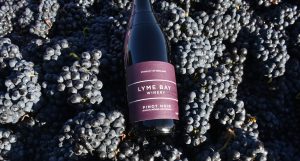
Both go into our Pinot Noir 2024, alongside Crouch Ridge Estate, Riverview and Crow’s Lane. All five are in Essex, and they are unusual in this country for their ability to ripen Pinot Noir. Some of our best Pinot Noir grapes come from the Blackwater Estuary, where Tudwick Hall sits. The fruit, from Dijon and Spätburgunder clones, was hand-harvested between 30 October and 11 November.
In the winery it’s made in small batches, with 10% whole bunches, and up to three times a day somebody pushes the floating skins back down into the juice by hand to draw out colour, flavour and structure. The wine then spends more than eight months in barrel, 32% of it new French oak, and goes to bottle with no fining and only a light filtration, to keep the delicate nuances of the fruit and oak. Cherry, raspberry and redcurrant lead, with just a hint of mulberry, then a touch of savoury spice, an earthy mushroom complexity and a lingering finish. In 2026 it took silver at the Decanter World Wine Awards, the IWSC and the WineGB Awards.
Each of these vineyards gives us more than one wine. Tudwick Hall’s Pinot Noir, hand-harvested in October 2025, also makes our single-vineyard Pinot Noir Rosé 2025, a bright, fresh and fruity rosé with concentrated red berry flavours, a subtle strawberries-and-cream complexity and a long, elegant finish.
Martin’s Lane gives us Bacchus Block 2025, a single-vineyard Bacchus from a highly regarded site, hand-harvested at optimum ripeness in late autumn. It opens with expressive aromas of gooseberry, pineapple and fresh lime, and finishes long, steely and lime-driven. Bacchus Block took silver at both the Decanter World Wine Awards and the International Wine Challenge in 2026, which, for a single Essex vineyard, we’re still rather pleased about. Martin’s Lane fruit also finds its way into our limited-release Chardonnay 2019 and our Classic Cuvée 2019.

If Shoreline shows what one valley can do, Brut Reserve shows what happens when we look further afield. It’s made from a select range of grapes ideally suited to sparkling wine, grown in seven vineyards across five counties: Crouch Valley and Great Whitmans in Essex, Sandhurst in Kent, Haygrove in Herefordshire, Wodetone and D’Urberville in Dorset, and Ashcott here in Devon. Only the finest press cuts are used, careful blending with reserve wines keeps its vibrant quality consistent from one bottle to the next, and its ageing is deliberately limited to 9 to 12 months to keep the style fresh.
The nose is clean and toasty, with a zesty lemon and green apple lift. On the palate it’s dry and fruit-driven, with crisp acidity, citrus and toast, and a vibrant, creamy mousse. It won gold at the Food & Drink Devon Awards in 2023, and it pairs beautifully with the quality fresh seafood the South West is so famous for.
English sparkling wine made its name first. Over the past decade, still wines have caught up, including some grapes that once seemed unlikely here. Sauvignon Blanc is one of them: our 2025, from Crow’s Lane, Tudwick Hall and Crouch Valley Vineyard, took silver at the IWSC in 2026.
In 2026 alone, our English wines took medals at the Decanter World Wine Awards, the International Wine Challenge, the IWSC and the WineGB Awards. We’re one of the UK’s most awarded producers of English still wine, and the growers deserve as much of that credit as we do.

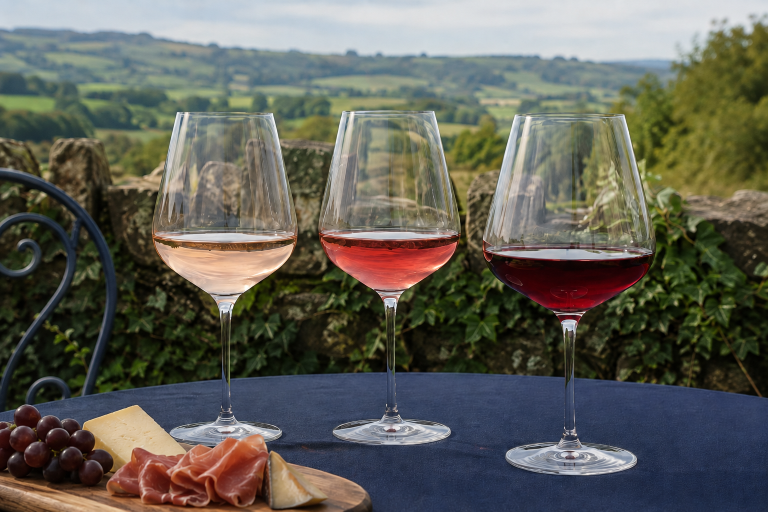
If you’d like to try these wines side by side, come and see us at our Cellar Door in East Devon. Pour Shoreline next to the Bacchus and the Pinot Noir, and ask the team which vineyards each one came from. They’ll be glad to tell you.
Or explore our full range of English wine online.
Sign up to our newsletter for new English wine releases, stories from our growers, and first word on Cellar Door tastings.
Please drink responsibly.